
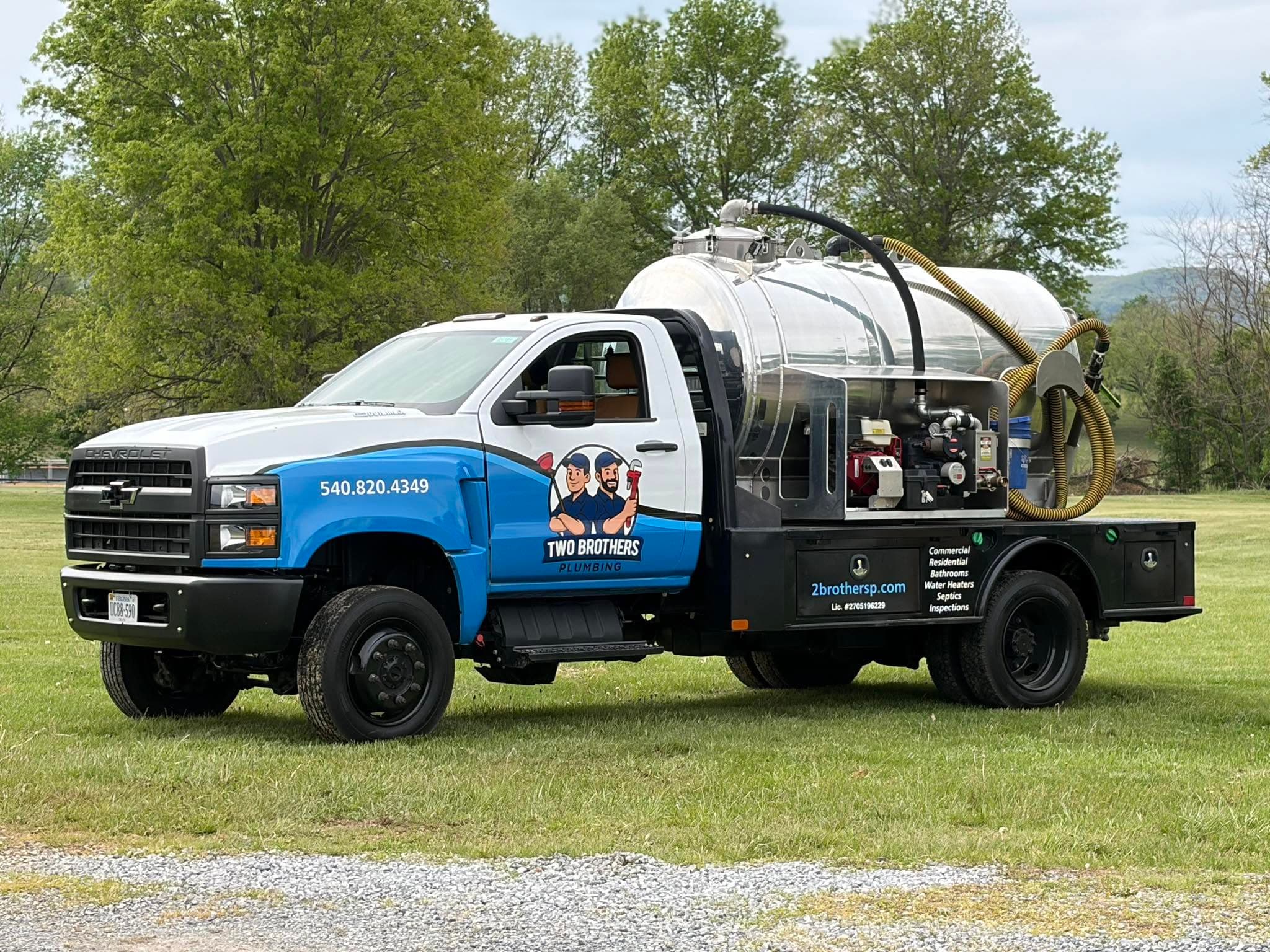
A grease trap should be serviced before fats, oils, and solids reach about 25% of the tank's depth — the threshold most health departments and sewer authorities measure against. Two Brothers keeps Shenandoah Valley kitchens under that line with the Grease Guardian Plan: scheduled pumping quarterly, twice a year, or annually, with hauling, permitted disposal, and your compliance documentation included. No contract required.
Signs Your Grease Trap Needs Service
A neglected trap doesn't just risk a violation — it backs up into your kitchen on your busiest night. Get on a schedule if you're seeing:
- Slow floor drains or a prep sink backing up — the trap is full and no longer separating grease.
- A sour or sewer-like smell in the kitchen — trapped grease breaking down and venting back inside.
- A thick grease cap visible at the top of the trap — usually past the 25% threshold inspectors measure.
- No pumping records on site — the first paperwork a health or sewer-authority inspection asks for.
What We Offer
Pump-and-haul on your chosen cadence — quarterly, twice a year, or annually — for under-sink traps and in-ground interceptors both.
High-pressure jetting of kitchen waste lines and interceptor outlets to cut out the hardened grease a pump-out leaves behind.
Grease hauled to a permitted disposal site and every visit documented, so your compliance log is already done.
Grease Management FAQs
How often should a grease trap be cleaned?
The standard inspectors apply is the 25% rule — service the trap before grease and solids reach a quarter of its depth. How fast you get there depends on your tank size and how much you cook. Busy kitchens usually land on quarterly service, moderate-volume kitchens on twice a year, and low-volume operations on annual. We'll look at your trap and recommend the cadence that keeps you comfortably under the line.
How is the Grease Guardian Plan priced?
Flat rate by tank size, with set pricing for traps up to 50 gallons and for interceptors up to 1,000 gallons. Anything larger is quoted custom based on size and access. Your rate also depends on how often we come out and whether you prepay the year. Call us and we'll price your specific setup in a couple of minutes.
Is there a contract?
No. You can change your cadence or stop the plan whenever you want — we'd rather earn the next visit than lock you in. If you do want to pay the year up front, we'll give you a better rate for it, but that's entirely optional.
What happens if we don't pump our grease trap?
Two things, and both cost more than the service. Grease escapes into your lateral and the municipal sewer, which is what triggers violations and fines from the sewer authority or health department. Before that, the trap stops working and backs up through your floor drains and prep sinks — usually mid-service, when shutting down is most expensive.
Do you handle the disposal and paperwork too?
Yes, both are included in the plan. We pump the trap, haul the waste, and dispose of it at a permitted facility — then record the service date and volume. That log is what an inspector asks to see first, so keeping it current is half of staying compliant.
Can you service the trap when we're closed?
Yes, and it's usually the better plan. We schedule grease service before you open or after close so we're not working around a live kitchen, and your staff walks into a clean trap instead of a service call in the middle of a dinner rush.