
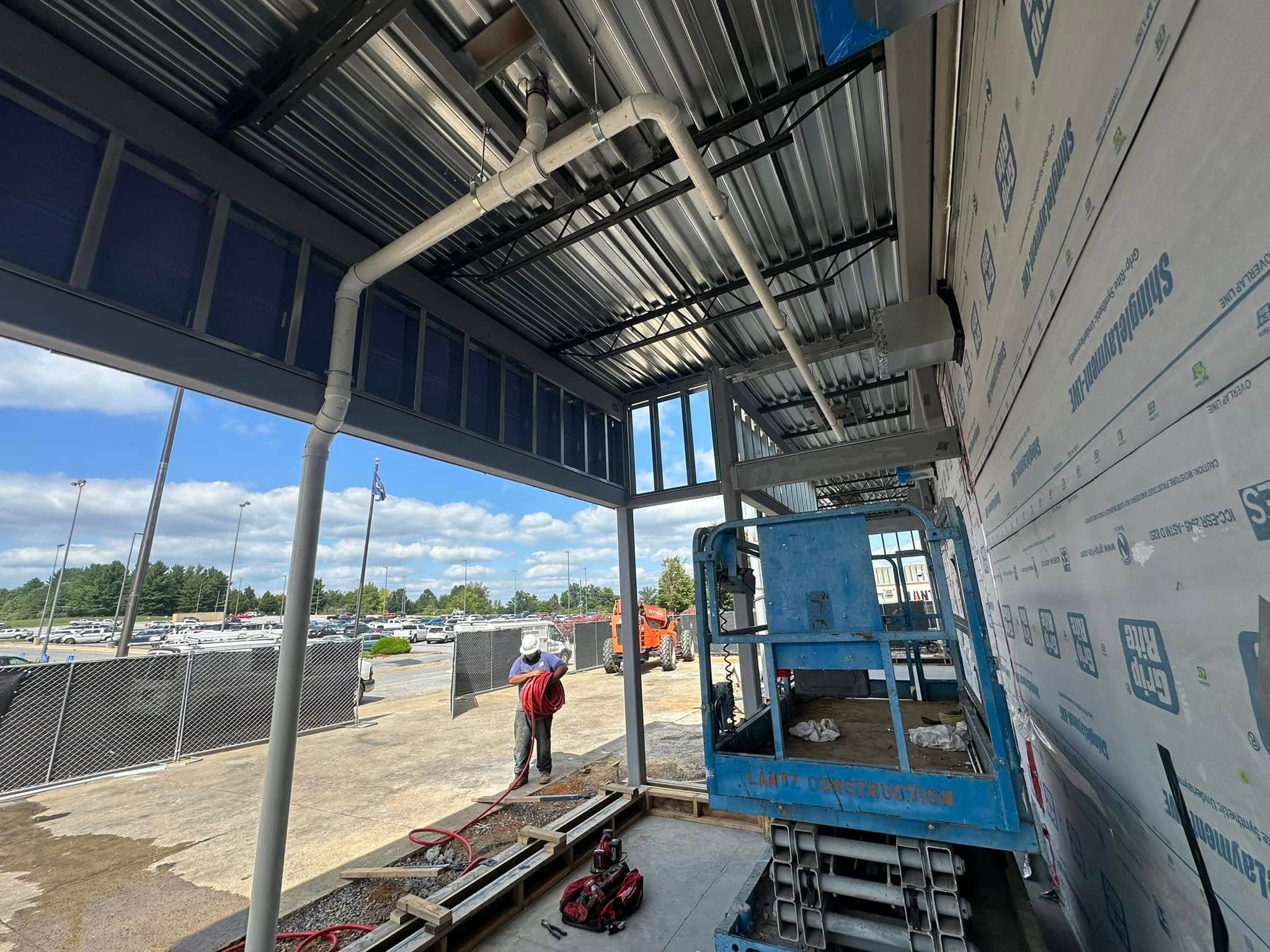
If you smell gas, leave the home and call us — and your gas utility — immediately. For new appliances, fireplaces, or generators, a licensed gas fitter ensures the line is installed safely and to code. Two Brothers provides certified gas line installation, repair, and leak testing across the Shenandoah Valley.
When to Call a Gas Fitter
Gas work is never a DIY job — safety and code compliance matter. Call a certified fitter when you notice or need:
- A rotten-egg or sulfur smell — leave the home immediately and call us and your utility.
- A hissing sound near a gas line or appliance — a possible leak that needs urgent attention.
- Adding a gas appliance — range, dryer, fireplace, water heater, or generator hookups.
- A higher gas bill or dead houseplants near a line — subtle signs of an outdoor leak.
What We Offer
New gas lines for ranges, dryers, fireplaces, generators, and outdoor kitchens — to code.
Leak detection, line repair, and corrosion fixes by certified, insured gas fitters.
Pressure testing and safety inspections for peace of mind and code compliance.
Where we do gas fitting
Elkton, Harrisonburg, Fredericksburg, Waynesboro, Greenville, and Somerset each have a town page for the plumbing we do there.
Shop address, septic and well work along Route 33. Two Brothers also handles heating and cooling in Elkton.
Town page →City drains, water heaters, and sewer laterals — a different job from the wells east of town.
Town page →The 22407 office: subdivision plumbing, gas fitting, and HVAC. No street on file beyond the ZIP.
Town page →Plumbing, septic, and water heaters. Furnaces and air conditioning go to Air Pro.
Town page →Wells, septic tanks, and water treatment south of Staunton. Not a furnace page.
Town page →Orange County wells and septic tanks, ZIP 22972, between the Elkton and Fredericksburg offices.
Town page →Gas Fitting FAQs
What should I do if I smell gas?
Leave the home immediately, don't flip switches or light anything, and call your gas utility's emergency line and 911 from outside. Then call us — we provide urgent gas leak repair across the Valley once the area is safe.
Do I need a permit for a gas line?
Most gas line work requires a permit and a licensed gas fitter to ensure it's installed and inspected to code. We pull the proper permits and handle inspections — critical for safety, insurance, and resale.
Can you run a gas line for my new range or generator?
Yes. We install gas lines for ranges, dryers, fireplaces, tankless water heaters, generators, and outdoor kitchens — sized correctly and tested for leaks before we turn it on.
How much does gas line work cost?
Cost depends on the line length, appliance, and whether trenching or wall access is needed — most appliance hookups run a few hundred dollars, while longer runs cost more. We always quote an exact, upfront price first.